
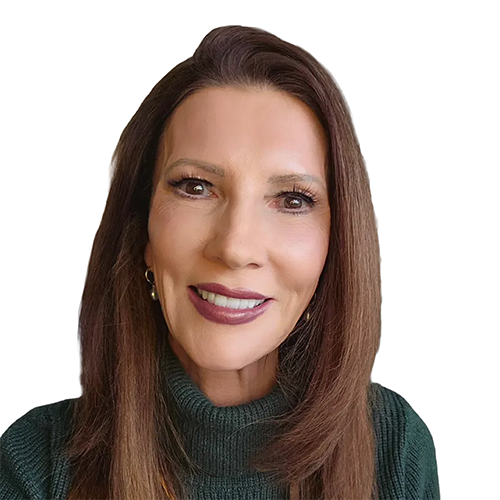
Rachael Honeyfield is a passionate advocate for individuals and families affected by GRN-FTD. Through her work on CureGRN’s communications and social media team, she is dedicated to connecting and empowering GRN families around the world, fostering collaboration, support, and participation in research that will lead to better treatments and, ultimately, a cure.
Rachael’s family story with FTD began when she was away at college. She shares her family’s journey here.
My first introduction to FTD was in 1992, when my mother's older sister at age 49, was diagnosed with Pick's Disease. She lived in Canada so I never witnessed any of her symptoms behaviors, but was I told about them from my mother, who would periodically travel to Canada to assist in her sister’s care. I was told about immense weight gain, wandering away from the house barefoot in the middle of winter, muted speech, and overall general confusion.
I was still in college at the time, studying neuropsychology, but my professor knew very little of Picks’s Disease.
I remained curious about the disease, but after my aunt's passing in 1996, (at age 53 and only 4 years post diagnosis).
Fast forward 10 years, when a family gathering presented another of my mother's sisters (at age 64) who appeared "off" behaviorally. It was deemed that she should no longer be living alone, due to her confusion and trouble speaking. She was diagnosed with FTD, which I quickly found out, was formerly named Pick's Disease. This aunt passed away, 4 years later, at age 68.
At this point, I realized there must be a genetic correlation.
My mother Mary, the quick-witted, health-conscious, exercise fanatic one day (around 2008) said, "I think I've forgotten how to swallow."
That comment stuck in my brain for years before I began to notice things weren't quite right with my mom. Unopened mail, empty refrigerator, random dents on her car bumper, etc. By 2017, I decided it was time to get her properly tested.
We entered a Familial research study at UC San Francisco and found she had PPA/FTD.
This led to my own genetic testing, which provided a positive result for the GRN mutation (progranulin deficiency). I was fortunate to participate in a clinical trial, even though the drug I received did not stop or slow the progression of FTD.
I am currently thriving and forever hopeful for a cure!


.svg)